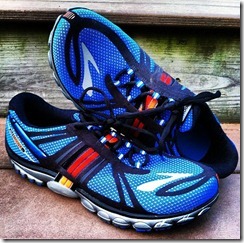
![Brooks Pure Connect Men's[3]](https://cdn.runblogger.com/images/2011/04/brooks-pureproject-marketing-gone-awry.jpg "Brooks Pure Connect Men's[3]") Brooks has made a splash over the past few weeks with the announcement of their PureProject line of running shoes (set to be released this Fall). While I applaud the arrival of more choice for runners from yet another shoe company, something just isn’t sitting right with me regarding Brooks’ approach to unveiling these shoes (and I actually like the shoes…).
Brooks has made a splash over the past few weeks with the announcement of their PureProject line of running shoes (set to be released this Fall). While I applaud the arrival of more choice for runners from yet another shoe company, something just isn’t sitting right with me regarding Brooks’ approach to unveiling these shoes (and I actually like the shoes…).
It started with the first post published on the Brooks Blog about the PureProject. In the post, the author discusses how Brooks partnered with a market research firm:
“…Brooks partnered with the consumer insights and design firm, IDEO. IDEO is often regarded as the preeminent design and innovation firm. This is due in large part to their unique, qualitative approach to consumer insight gathering and how they synthesize that into inspiration for design. Our team traveled the country from Chicago to Austin to NYC to talk to new runners ages 25 to 35.”
A couple of things bothered me about this. First, why emphasize market research? If you’re goal is to develop a performance product for runners, shouldn’t the foremost emphasis be placed on research as to how that product can be made in a way that is biomechanically most sound? Wouldn’t this be the point you’d want to emphasize when introducing the product to the world? I’d have preferred something along the lines of:
We studied every type of runner we could possibly find, both in the lab and on the road. We consulted with top experts on running mechanics across the country. We designed the PureProject shoes by putting a desire for a biomechanically sound product first and foremost, because we did the research and we know what runners need to help them maximize efficiency and minimize injury risk (and we have published the data to prove it). We varied heel heights, we varied cushioning, we varied last shape, and we came up with four shoes that we think will best suit the most runners.
I’m not a marketing expert, but if I’m relying on a shoe to allow me to run fast and keep me from getting injured, this is the kind of thing I want to hear. Later in the post, the author does say they are “…keeping biomechanics as the focal point for design on BOTH ends of the spectrum.” Why not put this right up front? Brooks has some excellent biomechanical experts who do work for them – why not make them the centerpiece?
Here’s a second point about the consumer insight approach – why focus your work on new runners? These are the people with the least experience out on the roads and trails, and are least likely to be able to provide helpful information about what makes a shoe effective in practice. I want design of my shoes to be driven by experienced runners and biomechanics experts, not by people who are just getting into the sport. Maybe I’m misunderstanding this, but it seems strange.
Moving along in that first Brooks Blog post, we have this quote:
“…the new runner feels disconnected from the current retail experience. They are clearly seeking a more simple understanding of the shoe selection process.”
Sounds good to me, and I agree. But in a more recent article in Running Insight, we get this quote from Brooks CEO Jim Weber:
“We see this very much as a specialty run product,” Weber said, “because it gives stores a chance to maintain their fitting process and offer their customers two different types of running experiences.”
OK. So, Brooks learned through its consumer insight research that new runners are looking for a more simple understanding of the shoe selection process, but their CEO states that they designed the PureProject shoes so that stores can maintain their current fitting process. Which is it going to be?
Next quote:
“We utilize a new proactive approach to biomechanics called Ideal. Ideal technology is built into the very geometry of these shoes. It was created to promote a runner’s ideal alignment by attempting to shift force application points to align force vectors, and then load internal structures to enhance performance and decrease the risk for injuries.”
I asked this question in my first post on the Brooks PureProject, but it’s worthy of repeating – enhanced performance and decreased risk for injuries compared to what? Brooks’ other shoes? Their competitors (e.g., Saucony’s Kinvara, Mirage, Cortana, and Peregrine – hmm, four shoes…)? Barefoot?
Regardless of the answer, statements like this mean nothing unless backed up by published data that can be read and evaluated by consumers if they so wish. Brooks is by no means unique in making statements like this (even barefoot proponents do it), but frankly I’m tired of reading statements about performance and injury risk without seeing hard data to back it up. Brooks released a PDF describing some of their IDEAL technologies and included some graphs based on lab data, but there is very little detail provided so it’s impossible to judge the meaning of this information (sample sizes, statistical significance, etc.). Interestingly, much of the information they report compares the PureProject shoes to “standard” running shoes, and points to the PureProject shoes as being better in a number of ways. That begs the question – which shoes were they compared against, and which performed worse? Are they still on the market?
Publish your research in a peer-reviewed journal. Fund a controlled trial of your shoes and publish it regardless of the results (to Brooks credit, this may be happening, just hope we get to see the results – see this news release). Show us the data!
There is one specific point I’d like to make about the PDF that Brooks published on the PureProject IDEAL technologies. In the document they tout the fact that their inverted heel design moves the point of ground contact forward:
“The Ideal Heel is an innovation that shifts the ground contact point forward. The runner lands with more ground clearance right under the middle of the heel rather than on an edge behind the center of the heel. This lets force vectors travel closer to joint centers and decreases lever arms and moments, leading to reduced internal stress and enhanced performance.”
“Landing more forward and reducing the lever arm also provides a smoother transition for the runner as they spend 10% less time in the braking phase wearing PureProject™ shoes. We also found that the shoes were able to shift the landing zone forward by 3cm, which is very similar to where runners hit the ground in the barefoot running condition. This encourages the foot to land under the body’s center of mass creating alignment of force vectors through the ankle, knee and hip joints.”
So if this is a good thing, why continue to design shoes with a more traditional style heel? The statement implies that the traditional heel increases internal stress and reduces performance!
I should also note that Dr. Joseph Hamill (who is doing some work for Brooks), just published a nice little study showing that running barefoot reduces loading rates compared to three iterations of shoes, all of which had a 4mm heel lift. All of the PureProject shoes have a 4mm heel lift. In their technology PDF Brooks points out that PureProject landings are still on the heel (albeit further forward), and there is very little discussion of running form anywhere in association with the product launch – I’m hoping that this will come later. I disagree with the statement about the similarity in landing location as compared to the barefoot condition, and Dr. Hamill’s study indicated that the likely reason for the reduced loading rate in the barefoot condition as opposed to that in the 4mm drop shoes was that barefoot landings tended to be on the midfoot/forefoot while shod landings were on the heel.
Moving along:
“Runners shouldn’t have to pay more for less technology. We want to build a better, biomechanically sound product in a lighter package that allows the runner to feel more with less.”
Excellent, and I agree once again. Well, the announced MSRP for the PureProject shoes ranges from $90-$120. You can come to your own conclusions on this one. We need more shoes like the New Balance MT101 – great trail shoe at a very reasonable price, and likely a direct competitor for the Brooks Pure Grit.
And I’ve saved the best for last – a gem from Brooks CEO Jim Weber on Running Insight:
“If you want to live your life with a ‘less is more’ philosophy, I can understand that,” Weber told Running Insight, “but when it comes to performance product the idea that ‘less is more’ is absolute crap.”
When I think about the term “performance” when it comes to a running shoe, I think sleek and lightweight. I think as little between my foot and the ground as possible. I think of a shoe like a racing flat, much like the Mach 12 cross-country flat that Brooks makes. The Mach 12 is a great little shoe, perhaps a bit on the narrow end, but it does a lot very well. It’s low to the ground, lightweight, and free of bells and whistles. What’s more, its cheap – probably half the price of any of the PureProject shoes. Now, maybe Weber is going to start pushing for a Brooks Beast-style XC shoe, but to say that less is more is “crap” in a performance shoe is just bizarre.
This statement by Weber is also a slap in the face to the minimalist movement. Maybe that’s what Weber intended when he said it, but why offend the movement that made the market for the PureProject shoes possible? They may have been working on these shoes for years, but they didn’t pull the trigger on launching them until they saw a market – there was no risk-taking involved here. How do I know this? Because I recall quite clearly back in 2009 when Brooks was gauging interest in minimalist shoes on Twitter. In fact, I wrote a post about it on November 12, 2009 encouraging people to contact them – here’s what I said:
I just received a Twitter message from @brooksrunning requesting feedback regarding interest in a minimalist running shoe. My understanding is that there is nothing currently in the works, but that they want to hear if people are interested in such a shoe (in other words, would there be a significant market for it). If you’d like to see a minimalist shoe from Brooks, email them at news@brooksrunning.com or send a tweet to @brooksrunning to let them know.
I was in the Brooks ID sponsored runner program at the time, and I was very impressed with the way Brooks had embraced the on-line running community. I dropped out of the program shortly thereafter because I realized that being sponsored by a shoe company was not a good way to be unbiased given that I was getting into review writing, but I will say that I was also very impressed with the people I interacted with at Brooks, and I don’t think Weber’s comments represent the company as a whole (I certainly hope not…).
All of this seems like a bit of a confused message – I get the sense that Brooks is entering the minimalist market not because it’s the right thing to do (which I personally think it is, and I’m happy these shoes are finally coming out), but because they fear missing out on an opportunity. It’s clear to me that these shoes are arriving to try and capitalize on a market segment that has been until now been dominated by a few other companies – first Nike with the Free, then Saucony with the Kinvara, and now New Balance, Merrell, and many others. Brooks wants a piece of the action, and I don’t blame them for that – it’s good business. It’s just that when you read things like the statement above from the people at the top of the company, and see that consumer research with new runners is being emphasized and touted moreso than the biomechanics research that seems to have been done, it’s hard to view this product launch as anything more than a big money grab.
At the end of all of this, what I really want to see is a more honest approach to the design and marketing of running shoes. I want companies to put science before marketing, and to publish the science that is done no matter what the result – after all, we are dealing with products that are designed to help people run safely. I want to know that marketing claims that are made are backed by sound data, and that they are not simply sound-bites that appeal to new runners lacking the experience to know any better. I want the shoe fitting process to be looked at in detail, and revised if what we are doing know is wrong (as recent science seems to suggest). I’ve singled Brooks out here in this post because I’m tired of reading the same-old rhetoric, but they are by no means unique in their approach. Industry-wide change and re-evaluation is needed. Injury rates are high and have not changed for decades – why is this? Is running just an inherently dangerous sport, or might shoes be part of the problem?
We need answers, and it’s time for shoe companies to take risks because it’s the right thing to do, to be truly innovative. Don’t settle for the status quo because it’s easy. Question dogma, do research, and publish it. We will all benefit as a result.
Update 10/24/2011: I share my thoughts on the Brooks Pure Connect here.


 About Peter Larson










I can understand the drive to get new runners and market towards them – it may be possible to make more money off of a bunch of startup runners who stop than one may off of lifetime runners. I don’t know the economics of it (and it kind of scares me to try to ponder). That being said, they’re sending incredibly mixed signals.
Great, great post Pete.
I completely agree about the need for shoe companies to do real research, and get it published in respected peer reviewed journals.
But I doubt the research would progress fast enough for the shoe companies to release a new model every year. They could follow the auto companies lead, and just play with aesthetics, but for a lot of runners that wouldn’t be enough.
In other words, I agree that the shoe companies should spend some of their loot on studies, but those studies may not produce anything that’s easy to implement.
It’s often difficult to make any firm conclusion from published research. Moving from hypothesis to theory usually takes a long time. Maybe too long for the shoe companies’ shareholders.
Bottom line is this line of shoes is amazing, I’ve tried them on and am very impressed – who cares about the marketing aspect… the kinvara was marketed as a high cushion minimalist shoe, which is an oxymoron, but is a very successful shoe. The ultimate goal is money for every shoe manufacturer, and if when striving to make money they make an amazing product, I’ll take it.
Funny, I had a very similar response when I first heard about PureProject. Brooks has left with with a bad taste in my mouth. Thanks for articulating my thoughts better than I could have. Right on.
I still have high hope for the shoes themselves. As usual, the designers and engineers get it right; marketing and the bean counters just don’t get it.
That’s how I feel – shoes are protective and in some cases corrective
devices. Their design should not be driven by marketing concerns, but rather
by sound and open science. Just imagine how drug companies would operate if
we didn’t have an FDA, even considering that that system is by no means
perfect.
Pete
Who knows…good article, Pete. But I must say that we can’t expect every shoe company to just ditch their entire line of traditional shoes just because the benefits of minimal/barefoot are starting to gain traction. It took years for shoes to go from tiny track spikes to abominations like the Brooks Beast. My guess is that these awkward years are a phase too, and that it will take years to make minimal the norm. Of course, many Americans always seem to want to buy their way into fitness and hobbies. Look at golf…is a new $1200 set of irons REALLY going to make you a better player? In other words, shoe companies will always be shoe companies and they are all trying to out-market one another by having all those “features” that you just have to have. I don’t fancy the awkward contradiction in what Jim Weber says and what this product statement clearly is, but what the hell…we get more choice, and this is better than the alternative of having no options. In fact, I don’t really give a damn about all this marketing stuff. If some designers at Brooks were able to get this line made because of the new “market” for minimal shoes, they may very well have done it in defiance on Mr. Weber, who personally may not agree with the philosophy, for all we know. I have to do this at my job (urban planner) all the time. I ave client communities whose right-wing elected officials would not give me the time of day if I asked them to put in new rules that would reduce greenhouse gas emissions; but if I ask them to do the same thing and show them on a spreadsheet that it will save them money….well, they let me do it. Could be the same thing here. You can picture the pure runners at Brooks crying out for this, but the brass saying it is a fad. Then the marketing folks get involved and say “hey, we can totally cash in on this, look!” and BOOM, they get the green light. To me, options = a great thing. And if it can come from Brooks, whom I support (especially from an environmental perspective), all the better. I think going more minimal across the board is the right thing for the running shoe community to do, but keep in mind that it may make (at least initially) running a more intimidating sport for people to get into (cushioned shoes can feel great in the store, right? Imagine if you went to a store as an overweight person who never ran and all you has to choose from were ultra-minimal shoes…until you learned to run they would hurt…options and transitional shoes like the New Balance Minimus line and some of these Brooks shoes are, to me, necessary and desirable)…and therefore we have to respect that Rome was not built in a day.
I agree with you Zak. I think these shoes are a positive development in many
ways, but my concern is more a general one. If a company like Brooks is
sitting on data that shows that standard shoes fare worse than these new
ones, you have to ask why that data is not made available. As a scientist,
peer review of work and publication is the norm, so this was merely my
attempt to peer review what Brooks is currently saying. I’m tired of
marketing taking precedence over science, and feel that science should
always be shared for the greater good. Like you, I’ve always had positive
dealings with Brooks on a personal level, I’m hoping you’re right in your
assessment of how these shoes were given the green light.
Pete
You know, Pete…I never thought about it like that. The “sitting on data that shows that standard shoes fare worse than these new
ones” is a truly valid point. Hmm. I wish it were simpler. I am glad I found this style of running and this approach to my favorite hobby, but I wish it was like this for everyone. I am turning into a seriously skeptical person. I enjoy many aspects of the Brooks approach to things, and I am very glad that they are coming out with these shoes. I think I will leave my own involvement at that and hope that time and the truth win out in the end.
My apologies to readers that love the Beast. Abomination is a strong word. I am sure it works for a lot of runners, it is a big seller. I just think that kind of overcorrection is wrong. Also, full disclose for anyone that doesn’t know me I am a former Brooks ID member.
You should not apologize for this. The Beast/Ariel is a total abomination of a shoe.
You are right, Woody. Thanks for calling me out…It’s funny, too. That was the first running shoe I was sold when I started running. I was overweight, unhealthy, and my wife was recently diagnosed with a very aggressive cancer. And we had a 3-month old. And my wife lost her job. All in the span of a few weeks.
I had no control over anything in my life at the time, and looking back, I took no control over my running, either. I bought into the brick-shoe pronation control paradigm and spent every step hurting myself constantly, and thinking it was MY fault. Another year of running in orthotics and control shoes and all that, and I was still hurting ALLthe time. It is a miracle I stayed with it. If I had known at the time what I know now, that I can literally and figuratively take “control” of my running by bucking the marketing system and freeing my feet, it would have been one of the only parts of my life I would have had control over. I started this journey about 6 months ago in true earnest, and today I pride myself on this. I can see why to many it is more than a shoe, it is a movement.
It is a heap of marketing for sure but kind of old school. Not going to the grass roots, such as the audience and author of this and other blogs first for input and by seeding this line and then generating word of mouth buzz is a mistake in my view.
This said let’s look a little closer at Brooks. See this January press release:
link to businesswire.com…]
Some highlights:
#1 market share in speciality running.
Brooks Adrenaline, a stability shoe, is the top selling shoe in speciality
Sales increased 19% in 2010
Vendor of the Year for Independent Running Retailer Assoc
Now here is a good one: Brooks is owned by Berskshire Hathaway.
So, what is this all about? They know that the trend is towards more minimal. Running in general is booming. Retail wall space is increasingly at a premium with all the new minimal or at least more natural running brands fighting for space (VFF, Altra, Hoka, Merrell, Newton, etc…) and Brooks has plenty of overlapping models. So, they simplify and come up with a “system” of Float and Feel leading to more minimal which they hope consumers will understand and retailers can embrace and sell (Inov-8 took the lead on this approach). Retailers are likely struggling with folks new to running wanting to go VFF and the like without prep or progression and thus may embrace a Brooks “prescription”. Brooks and retailers also need to maintain through the promise of technologies the typical running shoe pricing and margins. Fewer SKU’s mean manufacturing and distribution efficiencies and also a chance to maintain or acquire shelf space and keep their growth going.
IPO or spin out in their future given the Berkshire Hathaway connection? The IDEO participation, the Float and Feel theme, the rationalization of the line with new tech, etc… are the types of efforts one often sees in the run up to such events as new technologies, market research, line rationalizations looks good to investors.
This is a very well organized “product launch” by the business school book. The shoes may be great. I would love to try them. They seem to have forgotten social media and early adopters in their launch mix and when they do participate (the CEO anyway) seems to have literally put foot in mouth.
http://www.samwinebaum.blogspot.com
Good point about social media – there was a time when Brooks did a fantastic
job interacting with the running community on Twitter. It was the reason I
joined Brooks ID. Now it seems to be all marketing all the time. Get back to
the grassroots…
Pete
The fact is, all these companies really care about is sales. As someone who works for one of the largest specialty running retailers in the southeast, I see this everyday. Right now, these companies do not know what to do and they are playing both sides to increase sales. I talked to a Brooks rep over the weekend they admit that the traditional shoes will most likely trend toward the more minimal line but they are in a wait-and-see mode, unwilling to sacrifice sales in their traditional models. This applies especially to Brooks, since their sales have gone way up in what are now termed their “float” shoes, specifically their neutral cushioned models.
Also, heaven forbid, any of these companies produce internal research that backs up their marketing claims. I have heard the claims from all the major brands but have never seen any actual data to back any of it up.
That said, I talked with a Saucony rep a couple of weeks ago, and was told that in 2012, all of Saucony’s traditional models are moving from a 12mm drop to an 8mm drop. So, if this ends up being true, it would shoe that the market is trending in a new direction.
Kudos to Saucony if they do this, even more credit if they do it and provide
detailed data as to their reasoning. They seem to be more willing to take a
risk and have been an early adopter when it comes to offering
non-traditional shoes.
I also understand that this is a tricky time for shoe manufacturers –
however, I’m an advocate for the runner, and would hate to see sales
dictating what is available moreso than what science suggests is right.
Pete
I completely agree.
There are going to be other brands that are lowering their heel heights too, but way to go Saucony for being the first. That is awesome.
I think it will be a big success for the movement when 12mm is no longer the norm.
Also I hope these shoes are as good as one guest posted below. I have always been happy with Brooks products. My first shoe when I got into this whole minimalist running thing was the Launch and I loved it for a long time until I got used to a lower heel height by wearing racing flats. I also recommend brooks shorts for any one that is out there. They are just awesome and designed to the T.
If shoe companies admit that their high heel designs cause injury would they not be setting themselves up for being taken to court by injured runners?
I wrote about this bruhaha in my blog, but in spite of the circus surrounding the science behind the shoes (or lack thereof), they’re entering into an area that they’ve been criticized for ignoring. How is that bad? Regardless of their motivations, it’s giving the “more minimal” market more choices.
Also, I have to wonder about Saucony’s move… What’s going to happen to all the wearers of the “traditional line” when they buy a new 2012 pair of the same model, now that the heel height is 4mm lower? Yup, calf pain. The number of runners that pay attention to heel drop is extremely small. I see it on BeginnerTriathlete all the time — the person goes from a 12mm (or more) heel drop shoe to something much less, then blames the shoes when they get calf or achilles pain.
Lastly, any advertising exec will say there’s no such thing as bad publicity. We’re all giving them advertising that they couldn’t buy…
It’s not bad, in fact I think the fact that they are making this move is
positive. Just trying to keep the focus on getting good and accurate
information out there. If this discussion helps publicize what I feel is a
positive direction in the Brooks shoe line, than that’s a good thing.
Anything that can make more people aware that there are more options out
there than what we typically find at a store is good.
As for Saucony, I suspect that going from 12 to 8mm won’t cause problems for
most runners. I never had issues until I went to 4mm or less, and really it
was only ever bad when I went completely flat (forefoot striking is the
biggest trigger for calf soreness for me, probably due to eccentric
contraction and greater triggering of the stretch shortening cycle). Gradual
decrease in heel height is the right approach, dropping the whole line to
4mm overnight on the other hand would be a big mistake.
Pete
Great analysis Pete, it strikes me that Brooks is facing the typical corporate dilemma of trying to be all things to all people, and it comes across in the mixed messages they are giving in their marketing and public comments on the PureProject launch. This is a common problem for companies that perceive themselves as leaders in an industry, as they get hung up in the cannibalization risk involved in launching something radically new. They also seem to be struggling with a bit of channel conflict, not wanting to criticize specialty shoe stores while at the same time needing to do so in order to promote PureProject.
In taking such an approach, they leave themselves vulnerable to true innovators without the baggage of history and incumbency, or to traditional competitors who are quicker to see the opportunity such a market shift presents and embrace it more fully, with true passion for their new offerings (like Saucony appears to be doing, per Woody’s comment).
That being said, I would love to get my hands on the PureConnect and give them a spin. I may compare them and the Kinvaras the next time I try out running shoes.
It’s a tough topic to handle from a business perspective, isn’t it.
Thanks for sharing your thoughts Greg!
In line with your post Pete, check out the open letter written recently to Brooks CEO Jim Weber, by Dr Craig Richards: link to huntergait.com.au…
Yeah, Craig sent me the link – wonder if he’s gotten a response?