Earlier today I wrote a blog post about Nike’s release of the new Nike Free Run+. As I was driving home, I got to thinking about why I was disappointed by this shoe (these are the things I think about, and yes, I do have a problem…), and this post began to crystallize in my mind.
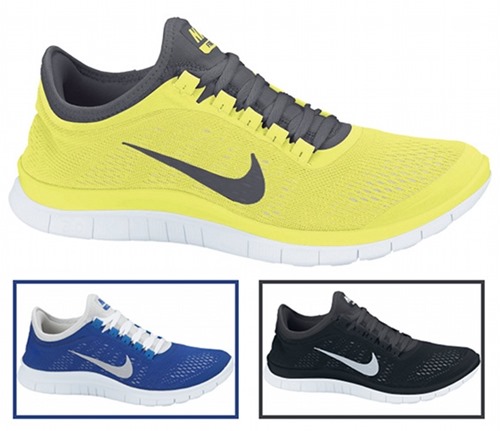
So here it is – Nike, you dropped the ball on this one. The only thing I can say about the release of the Free Run+ (probably better named the Free 6.0) and the apparent disappearance of the Free 3.0 is that Nike is moving away from what the Free line was originally meant to be. Yes, they shoot off about the benefits of “barefoot running” in their post introducing the Free Run+, but really, there’s not much “barefoot-like” about the shoe other than the fact that it’s lightweight and flexible. As someone who was a huge fan of the Free 3.0, I’m more than a bit disappointed with what I see in this shoe.
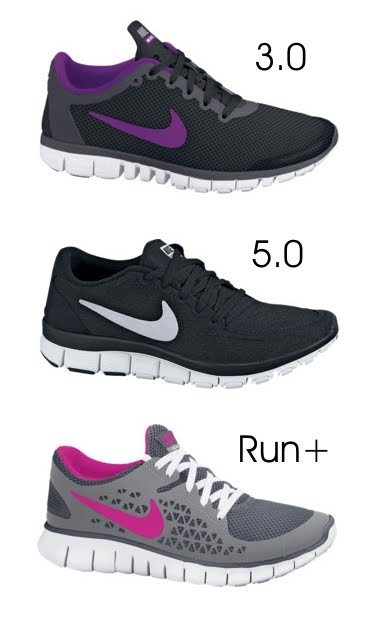
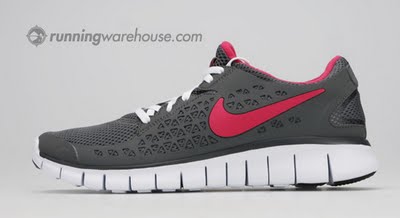
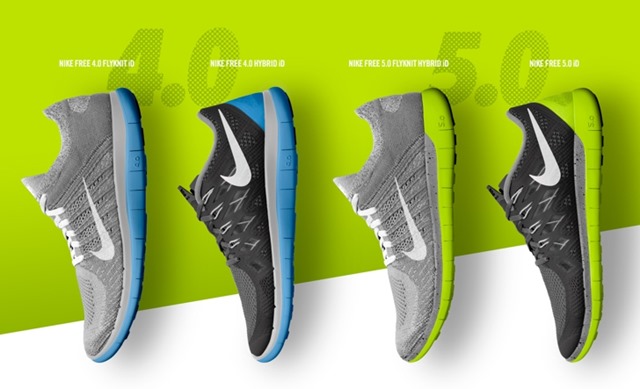
For those of us who are fans of barefoot and/or minimalist running, the words “cushioning” and “stability” are immediate turn-offs, and both of these words are emphasized in Nike’s description of this shoe. The Nike Free Run+ appears to sport a bigger heel than on either the 3.0 or 5.0 – I could be wrong, but just look at the comparison picture to the left and see if you agree (Update: apparently I am wrong about the heel, see this post for more). I’m now convinced that the strengthening benefit I get from my runs in the Vibram Fivefingers is due to the lack of a built-up heel, which forces my stride/gait to adapt, and thus provides a much better workout to the soleus muscle in the lower calf and the muscles in my feet. All you have to do is look at the work of Daniel Lieberman of Harvard University and his barefoot running paper published in Nature this year to see that barefoot running is characterized by a more midfoot/forefoot gait – slapping a fat heel on the Free Run+ makes it even less likely that this shoe will allow this type of gait. As a result, it seems that the Free Run+ is even less of a “barefoot-like” shoe than it’s own predecessors in the Free line. All I see here from Nike is a marketing gimmick using the “barefoot” buzzword, without any attention paid to the very real and good science that has come out on barefoot running in recent months.
So why would Nike move in this direction rather than making a Free 2.0 or a Free 1.0 by minimizing the heel-toe drop and keeping the very minimal upper of the Free 3.0? The way I see it, the Free Run+ is a pretty shoe that’s designed to appeal to a mainstream market that may have read an article about barefoot running but doesn’t know much more about it than that. Nike is great at designing and marketing pretty shoes, and I don’t doubt that this one will sell well, but if they really wanted to make a statement and support the minimalist running movement, this shoe does nothing to further the cause from a technology standpoint. Granted, the Free Run+ is surely flexible and might be more minimalist than most shoes on the market, but this is not a barefoot running shoe with that heel – don’t believe the marketing.
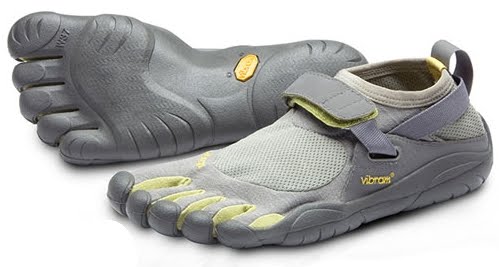
Maybe Nike feared making a shoe that would appeal only to a niche market, but one need look no further than the Vibram Fivefingers (see picture above) to see that a niche shoe can garner a lot of attention and sales. Vibram had the balls to put out a shoe that is to many people a strange curiosity, and to others god-awful ugly. I would love to have been a fly on the wall when the Fivefingers were first pitched – it’s a miracle that they were ever produced in the first place given their far-from-mainstream look. Granted, they weren’t originally designed as running shoes, but they filled a need, and now Vibram is coming out with a running specific model (the Bikila – see below) to better meet the needs of those of us who like the minimalist benefits that they provide. Maybe they’ll flame out and wind up being a passing fad, but if researchers like Daniel Lieberman keep publishing good science on barefoot and minimalist running (and I fully believe his data are sound regardless of his openly admitted funding ties to Vibram), I think this running style has a long life ahead of it.
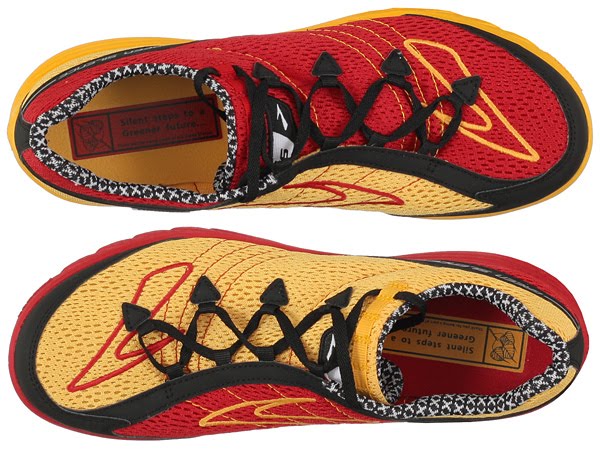 Now that Nike has dropped a golden opportunity to help fill this minimalist niche, I’m still waiting for one of the major running shoe manufacturers to produce a truly minimalist shoe. Rumor has it that Brooks is working on one, and I’d urge them to get it done and put it out there on the market. Brooks has shown some balls themselves by releasing the Green Silence (see picture to the left), a shoe that is both the most environmentally friendly shoe on the market and one whose asymmetrical colors and odd appearance makes it look like it was designed by Ronald McDonald (and I love it!). It’s not a truly minmalist shoe in the spirit of the Vibrams, but it’s a step in the right direction for Brooks (lightweight, lowish heel-toe drop). Lets hope they follow this up and make me a proud BrooksID member by providing us with a truly minimalist shoe.
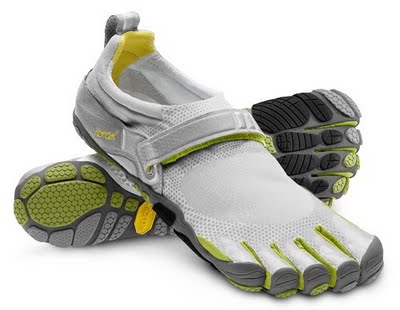
Being someone who has a documented running shoe problem, I respect companies who push the envelope with their shoe designs. Nike deserves a lot of credit for originally creating the Free line, and as I stated earlier the Free 3.0 is one of my all-time favorite shoes, but in my opinion they are moving in the wrong direction. Don’t believe the hype about the Free Run+ – if you want a truly barefoot-like shoe, save your money and wait for the Vibram Fivefingers Bikila (Update 7/17/10 – the Bikila is now available, and I have started posting my thoughts), which should be arriving in stores any day now (see picture below). Until somebody else steps to the plate, Vibrams remain the best we have when it comes to minimalist shod running.
Update 7/17/10: Check out my guide to minimalist running shoes for more information on these and other shoes.
Update 10/27/2010: I have now posted my own Nike Free Run+ review. Check it out here: https://runblogger.com/2010/10/nike-free-run-review-nice-transitional.html.


 About Peter Larson










Crazy Shoes… maybe I have to test running with a barefoot-like shoe like the Free 3.0 or the vibram…
Nike frees are a joke when it comes to minimalist shoes. There not minimal at all. Still clunky, and bulky, not free!
the best minimalist shoe to run in is a good quality type indian moc….my favorite is my comanche mocs….star has built somethin pretty close with the runamoc…with vibram bottoms….it’s very close to a good moc…el jefe
I bought the original Vibram FiveFinger shoe when it first hit the market. I don’t go running in them although I do run around in them (like when my cross country team is competing in a meet). I also jumped right into the original Nike Free 3.0. I still have the original pair and love them. I’m less enamored with the 5.0 and have no interest in the Run+. I’ll buy a minimalist shoe from any major manufacturer who makes one. I’ve been running injury free since I bought the Free.
Good to hear – I’m also still a big fan of the Free 3.0.
Pete
I would love to get a pair of Nike Free’s, but I’ve been holding out for them to make a pair that was close to what they actually market it as. It doesn’t have to be truly minimalist with a 4 mm sole. I don’t care about a little cushioning, but I’d like to see no heel-toe drop and no arch support. Let me put in arch supports if I want them. And a 0mm drop with the thickness of the 3.0 toe box would be perfect. When they make this elusive 1.0 (closest to barefoot on their scale) with the same level of cushioning across the shoe, I’ll probably get 3 pair.
I agree – bring on the Free 1.0 already!
Thanks Pete for your reviews. I’ve been a runner forever, 45 years actually, and I am suffering tight quads and a soreness outside my right knee. I am just finishing ‘Born to Run’ and it is pushing me back to minimalist shoes. Am going next week to a workshop with Terr Plana who produce the Vivobarefoot evo – barefoot feel and eco friendly. I will pass on what I find out.
Dave Richards
Leicester
England
Sounds great, interesting to hear how the workshop goes!
Pete
<thanks (that=”” 000m:=”” 1.53=”” 10=”” 13.1:=”” 14:14=”” 1500m:=”” 1:07=”” 26.2:=”” 2:21=”” 3000m:=”” 30:28=”” 39=”” 3:47=”” 5000m:=”” 800m:=”” 8:17=”” a=”” am=”” amateur=”” americans=”” and=”” another=”” any=”” are=”” as=”” at=”” barefoot=”” barefoot.=”” been=”” blanco=”” blessed=”” but=”” caballo=”” can=”” clan=”” considered=”” dean=”” distances=”” doping=”” et=”” even=”” ever=”” fuelled=”” full=”” half=”” happy=”” have=”” havent=”” i=”” im=”” impressing=”” incredibly=”” indians=”” injuries,=”” is=”” just=”” karnaze=”” like=”” make=”” marathon.=”” money=”” my=”” never=”” not=”” nothing?,=”” of=”” out=”” pbs=”” pete,=”” provclaimed=”” races)=”” runner=”” runner.=”” running=”” see,=”” self=”” serious=”” slow=”” so=”” standard=”” tara=”” ted,=”” the=”” this=”” to=”” ultra=”” way=”” weirdo=”” who=”” whole=”” without=”” you=””></thanks>
Good job on the article. The more attention to a proper running technique, the better. Just fyi, the only circumstance you use your soleus muscle is when your knee joint is around 90 degrees of flexion (bending). Otherwise, you primarily use your gastrocnemius (the visibal one with a lateral and medial head).
Can you suggest a good book on running technique? I am reading Born to Run…very interesting and gives a lot of history. I need more specifics on technique. My knee injury happened when I got a new pair of running shoes. Now I am back to my 1st worn out pair…looking into minimalist shoes but not sure what to buy.
Ok after looking more at your blog I see that you have a ton of info and articles on here! This is great stuff!
Thanks – you may also want to check out Steve Magness’ Science of
Running blog for more on technique.
Pete
On Friday, November 12, 2010, Disqus
Take a look at ZEMgear. They have a pretty good minimalist shoe.
Don’t know if anyone else has found the Mizuno Wave Universe 3, but I found this shoe because, what I call “the old army” is not willing to change and look at the pros and cons of minimalistic running shoes. Soldiers Magazine from October 2010(?) has an article about how the foot diagnosis can’t really tell what shoe is right for you. Oh yeah, got a pair of Frees, wore them for 1 run, and haven’t put them on since. 99% of my running time is in VFFs, used to have PF and a stress fracture, VFFs cured them.
ohh man!!!!
I just got dashed by the new Nike Free Runs, that I never realized what the numbers were!!!, and the people in the store didnt know either!!! ended up bewitched by the blue… and bought them! but now I know I was right in the first place when I tried the 3.0 v? The 5.0 are awesomely light and awesomely comfortable, and have felt much better in them than in my Kinvaras 2, so much I considered the 5.0 as my marathon to be shoe… But feel kinda ridiculous running with the 5.0 while doing all my training barefoot & minimalist (literally + FFs + MT10s) aaaargh I guees I will have to donate the blue 5.0s to my brother and just get another pair this time the 3.0 whatever version the new are…
Pretty good post!
I just found your blog and wanted to say that I have really enjoyed reading
your blog posts. Any way I’ll be subscribing to your feed and I hope you post
again soon.
Thanks!
—-
Pete Larson’s Web Links:
My book: Tread Lightly – link to ow.ly
Work: link to anselm.edu…
Blog: https://runblogger.com
Dailymile Profile: link to dailymile.com…
Twitter: link to twitter.com
do not buy anything in this kupbon is just a fraud.